Why Use Bacteriostatic Water for Research Peptides?

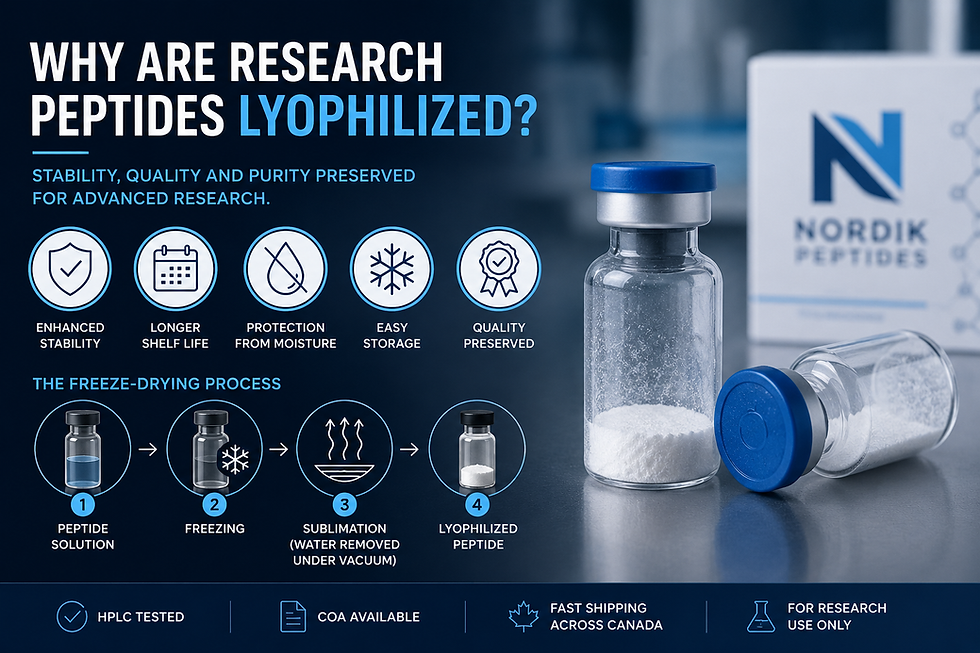
When a research peptide is supplied as a lyophilized powder, it must be reconstituted with an appropriate solution before it can be used in laboratory protocols. Among the available options, bacteriostatic water is one of the most commonly used because of its preservative properties and suitability for multiple withdrawals under controlled laboratory conditions.
What Is Bacteriostatic Water?
Bacteriostatic water is sterile water that contains a small amount of 0.9% benzyl alcohol, which acts as a bacteriostatic agent. This ingredient helps inhibit bacterial growth after the vial has been opened.
Because of this property, bacteriostatic water is widely used in laboratory environments where multiple withdrawals from the same vial may be required during research protocols.
Why Is It Used for Research Peptides?
Researchers frequently choose bacteriostatic water for several reasons:
Suitable for reconstituting lyophilized research peptides.
Designed for protocols requiring multiple withdrawals from the same vial.
Helps limit bacterial growth after opening.
Easy to use with laboratory vials and syringes.
Compatible with a wide range of research protocols.
Bacteriostatic Water vs. Sterile Water
Although both products are sterile, they are designed for different purposes.
Sterile water does not contain a preservative and is generally intended for immediate use after opening.
Bacteriostatic water contains a bacteriostatic agent that helps inhibit bacterial growth, making it a preferred option for laboratory protocols that involve multiple withdrawals from the same vial under controlled conditions.
Best Practices for Laboratory Handling
To help maintain sample quality and laboratory integrity, researchers should follow good laboratory practices:
Use sterile laboratory equipment.
Disinfect vial stoppers before each withdrawal.
Store products according to the manufacturer’s recommendations.
Avoid contamination of laboratory equipment.
Handle samples in a clean and controlled laboratory environment.
Conclusion
Bacteriostatic water is widely used in research laboratories for the reconstitution of lyophilized peptides. Its bacteriostatic properties and compatibility with multiple-withdrawal protocols make it a common choice for many laboratory applications.